
Build the network
your operation can depend on.
From structured cabling and fibre to Wi-Fi, switching, servers and secure remote connectivity, we build the infrastructure layer the rest of the business depends on.

Connectivity designed
around the operation.
A dependable network starts long before the first switch is powered on. We look at spaces, users, devices, traffic, access and growth so the infrastructure fits the environment it has to serve.
Discuss your networkStructured cabling & fibre
Build the physical layer properly with organised copper and fibre infrastructure, sensible pathways, labelling and testing that make future changes easier.
Switching & routing
Design the traffic paths behind the business with switching, routing, VLANs and uplinks sized around reliability, security and the way the organisation operates.
Wi-Fi & coverage
Plan wireless access around people, spaces and devices instead of simply adding access points until the signal looks acceptable.
Servers & virtualisation
Connect local compute, storage and virtual machines into an infrastructure layer that can be maintained, expanded and protected as requirements change.
Firewalls, VPN & secure access
Protect the network edge and support controlled remote access with firewall policy, VPN connectivity and segmentation designed around real users, systems and business risk.
Physical connections.
One dependable foundation.
Edge connectivity, security, wireless, switching, servers and fibre are designed as one environment so performance and support do not depend on isolated decisions.
From the rack
to the user.
The strongest environments treat cabling, switching, wireless, compute and secure access as one connected foundation rather than unrelated projects.
Structured cabling
Copper runs, patch panels, racks, pathways, labelling and certification.
Fibre infrastructure
Backbone links, fibre uplinks and clean inter-building or high-capacity connectivity.
Switching & routing
Core and access switching, VLAN design, routing and controlled traffic flow.
Wireless networks
Business Wi-Fi planned for coverage, density, roaming and secure access.
Servers & virtualisation
Physical servers, virtual machines and the local infrastructure they depend on.
Firewalls & VPN
Perimeter controls, remote connectivity and network boundaries designed around real access needs.
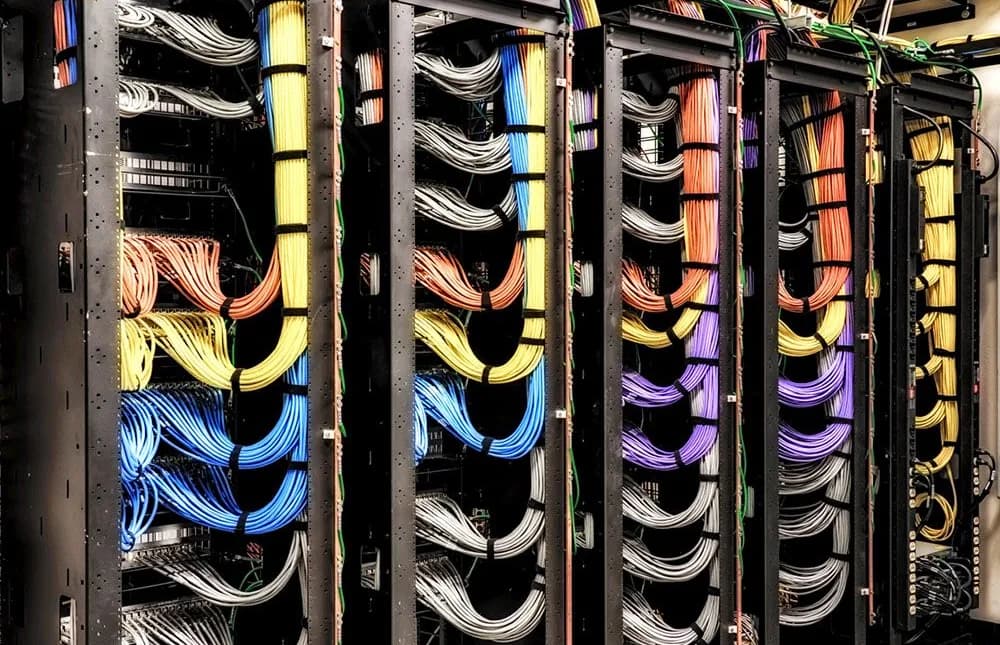
The physical layer
still matters.
Reliable infrastructure is easier to support when the rack is organised, links are labelled, pathways make sense and the environment is documented. Clean installation is not cosmetic — it reduces risk and speeds up every change that follows.
Survey & design
Understand the site, users, devices, traffic, growth and constraints before choosing equipment or cable routes.
Install & organise
Build cleanly with labelled cabling, sensible rack layouts, controlled patching and infrastructure that can be maintained.
Test & document
Validate links, record the environment and leave behind information that makes troubleshooting and future changes faster.
Support & expand
Treat the network as an operating platform that must be monitored, maintained and extended without creating new chaos.
Designed for performance.
Built to be supported.
A network should not only work on installation day. We design for the realities that come afterwards: growth, troubleshooting, security changes, new devices and the people who have to maintain it.
Segmentation by design
Separate traffic and access where the operation, security model or device types call for it.
Capacity with headroom
Size switching, uplinks, Wi-Fi and server connectivity for realistic demand instead of today's minimum.
Clear visibility
Make faults easier to isolate with organised infrastructure, sensible naming and known network boundaries.
Documentation that survives
Record racks, links, addressing and key dependencies so the environment is not dependent on memory.
Resilience where it matters
Build redundancy and recovery paths around the areas where failure would materially interrupt the business.
Maintainable infrastructure
Choose layouts and components that can be supported, replaced and expanded without rebuilding everything around them.